

Calming Bedtime Routines for Children with Sleep Challenges (Especially Autism)
Written by Elisha Iggulden, M.Ed., BCBA, CBSS

For any parent, navigating a child's sleep challenges can feel like an endless night. But when your child has autism, these difficulties can be amplified, often due to sensory sensitivities, a need for predictability, and differences in sleep-wake cycles. The good news? A well-structured, calming bedtime routine, powerfully supported by a visual schedule, can be a game-changer.
The use of visual schedules is an evidence-based strategy for children with autism and other developmental or language delays. Their magic lies in providing clarity and predictability, which is often deeply comforting for children with autism. Let's delve into how to create and implement a calming bedtime routine that paves the way for peaceful sleep.
The Superpower of Routines, Especially for Children with Autism
Children, and particularly those on the autism spectrum, thrive on predictability. Routines offer:
Reduced Anxiety: Knowing what's coming next minimizes uncertainty, a common trigger for anxiety.
Increased Independence: As they learn the routine, children can follow it with less prompting, fostering a sense of accomplishment.
Clear Expectations: A routine visually communicates what needs to happen, leaving less room for negotiation or confusion.
Sensory Preparation: A calming routine can gradually dial down sensory input, preparing their bodies and minds for rest.
A Sense of Control: Following a familiar sequence can give a child a feeling of control over their environment, which is highly valuable.
Crafting Your Calming Bedtime Routine: Specific Steps
A successful bedtime routine is a sequence of soothing activities that signals to your child's body and brain that it's time to wind down. Aim for consistency in order, timing, and duration.
1. The "Wind-Down" Hour (or 30 minutes):
Start your routine well before "lights out." This isn't just about the last 10 minutes; it's about a gradual transition.
2. Calming Bedtime Activities:
Warm Bath or Shower: The warmth can be deeply relaxing. Consider adding unscented Epsom salts for muscle relaxation or a few drops of calming essential oils (like lavender, diluted and used safely).
Gentle Massage: A light massage with lotion can be very soothing, especially for children who enjoy touch pressure. Focus on arms, legs, or feet.
Quiet Play: Engage in low-energy activities like puzzles, building blocks, or drawing. Avoid screen time (TV, tablets, phones) at least an hour before bed, as blue light can interfere with melatonin production.
Story Time: Reading together provides a calm, connected moment. Let your child choose the book to give them a sense of control.
Listen to Calming Music/Sounds: Soft instrumental music, nature sounds, or white noise can help block out distracting sounds and promote relaxation.
Deep Pressure Activities: For children who benefit from deep pressure, consider a weighted blanket (used safely and with supervision), a firm hug, or "sandwich squeezes" with pillows.
Toilet Time: Integrate this naturally into the routine to avoid night wakings due to needing to use the bathroom.
Brushing Teeth: A crucial step for hygiene, and another consistent element of the routine.
3. The Sleep Environment:
Ensure the bedroom is conducive to sleep:
Dark: Use blackout curtains if needed.
Cool: A slightly cool room (around 65-70°F or 18-21°C) is ideal for sleep.
Quiet: Consider white noise to mask unexpected sounds.
Comfortable: Check bedding, pajamas, and any sensory aspects that might cause discomfort (e.g., tags on clothing, rough textures).
Familiar Comforts: A special blanket, teddy bear, or security object can provide reassurance.
Implementing the Visual Schedule: Your Ultimate Tool
A visual schedule takes your carefully crafted routine and makes it concrete and understandable for your child. Many of these visual schedules can be purchased online, or you can make your own, using line drawings or photos downloaded from the internet.
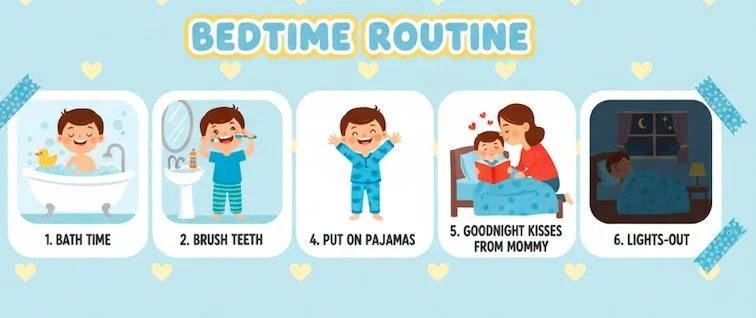
1. Create Your Visual Schedule:
Use Clear Images: Simple, unambiguous pictures representing each step (e.g., a bathtub for "bath time," a toothbrush for "brush teeth," a book for "story time").
Involve Your Child (If Appropriate): Let them help choose pictures or decorate the chart.
Keep it Concise: Start with 4-6 key steps. You can always add more later if needed.
Horizontal or Vertical: Choose the format that works best for your space and your child's preference. (We've seen great examples of both!)
Laminate (Optional but Recommended): This makes it durable for daily use.
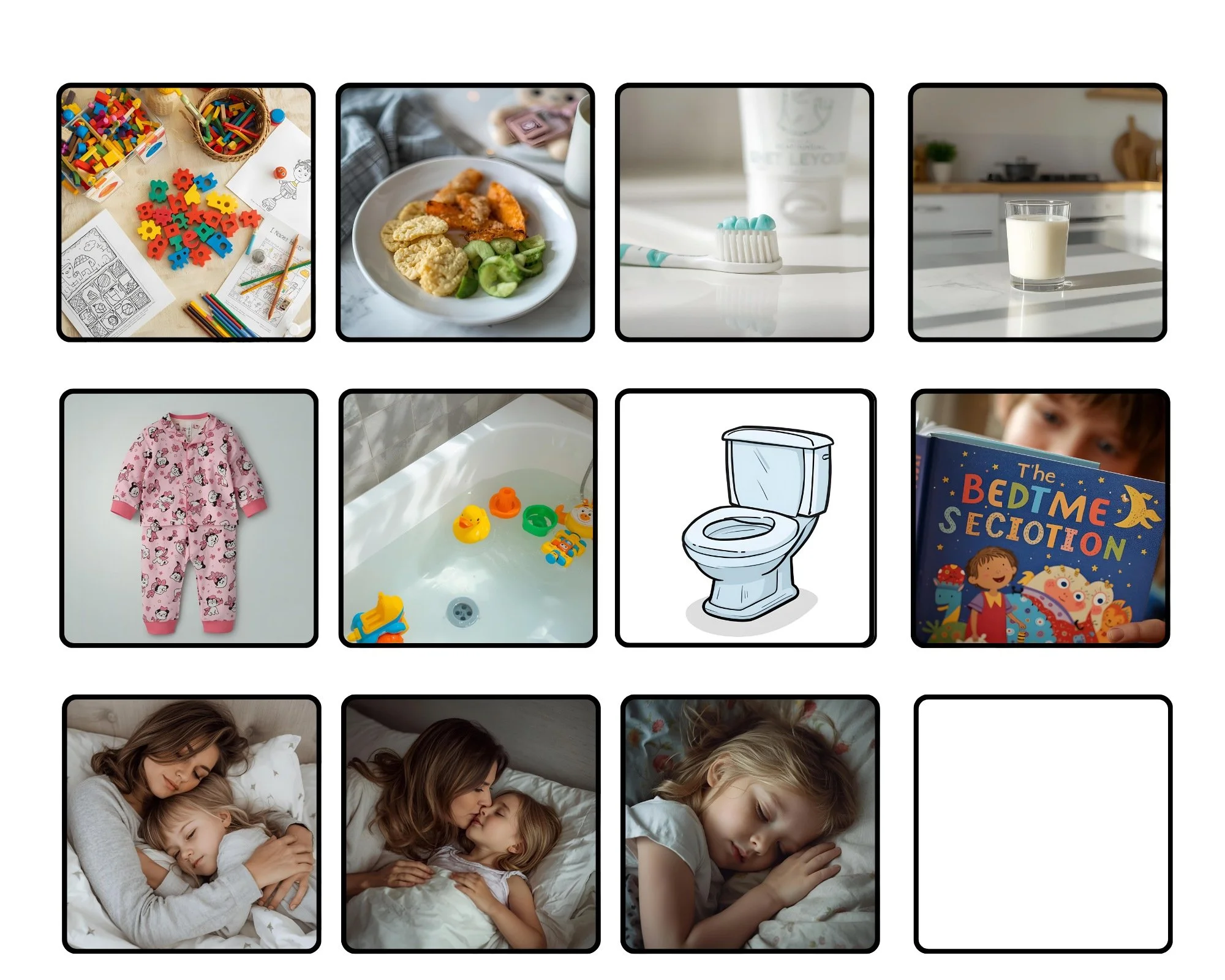
Above are some examples of images that were downloaded from the internet. You can also use photos of your own child and photos of your child’s toothbrush, pajamas, books, etc. If your child is older, you can create line drawings to represent these things. For younger children, however, it is recommended to use actual photos, as they may not have yet developed the understanding that a drawing represents something concrete.
To make this easier for your family, I’ve created a collection of free printable visual schedules and sleep tools that you can download directly from my resources page.
2. Introduce and Explain:
Positive and Calm: Present the schedule during a calm, non-bedtime moment.
Walk Through It: Point to each picture and verbally explain what happens at that step. "First, we have a bath. Then, we brush our teeth..."
Practice (Optional): If your child is highly anxious, you might "practice" the routine once during the day, going through the motions without actually completing each of the steps.
3. Use It Consistently, Every Night:
Point and Transition: At each step of the routine, point to the picture. As you complete the activity, have your child remove the picture, flip it over, or slide it into a "finished" pocket. This gives them a clear sense of progression and completion.
Verbal Reinforcement: Use simple, consistent language that is appropriate for your child’s developmental level: "Okay, bath time is finished! Now, what's next? Brush teeth!"; “Nice brushing teeth!”.
Be Patient: It takes time for new routines to stick. There will be bumps, but consistency is your greatest ally.
4. Flexibility within Structure:
Life Happens: Don't stress if you have to deviate occasionally. Just get back to the routine the next night.
Add visual Cues for Changes: If there's a planned change, try to add a visual cue (e.g., a "no bath tonight" picture) to the schedule to prepare your child.
For more details on how to implement a visual schedule, you can download my free sleep guide, Visual Bedtime Routines for Children with Autism.
Tips and Strategies for Success
“First-Then" Language: This can be very effective, especially for children with autism and language delays: "First, bath, then story”.
Sensory Considerations: Pay close attention to your child's sensory preferences. Does the bath water need to be a specific temperature? Do they prefer certain pajamas? Are bright lights overwhelming? Adjust as needed.
Remain Calm: Your calm demeanor can be incredibly contagious. If you're stressed, your child will likely pick up on it.
Use Positive Reinforcement: Shower praise when your child follows the routine! "You did such a great job following your bedtime journey tonight!"
For significant improvements, consider incorporating a reward chart alongside the visual schedule. For more on rewards charts, see my blog article, Using Rewards Charts to Conquer Sleep Challenges.
Consult a Professional: If sleep challenges persist despite consistent efforts, reach out to your paediatrician to rule out any underlying medical issues, and consult with a BCBA or Certified Behavioral Sleep Specialist who can offer personalized strategies.
Implementing a calming bedtime routine with a visual schedule is a powerful act of love and support for your child, especially for those with autism. It's not a quick fix, but a consistent, gentle guide that leads them on a peaceful journey to dreamland, fostering independence and resilience along the way.
Sweet dreams to you all!
If you’re feeling overwhelmed and would like to discuss your child’s unique sleep needs, I invite you to schedule a free initial consultation. We can talk through your challenges and see if my personalized sleep support is the right fit for your family."

MEET THE AUTHOR
Elisha Iggulden, M.Ed., BCBA, CBSS is a Board Certified Behavior Analyst (BCBA) and Certified Behavioral Sleep Specialist with over 14 years of experience supporting children and families. She is the founder of Gentle Sleepers and specializes in sleep support for toddlers and children (ages 1-10), with specialized expertise for neurodivergent children, including those with autism, ADHD, and anxiety. Elisha offers virtual sleep consultations and support to families worldwide.
