

Using Rewards Charts to Conquer Your Child’s Sleep Challenges
By Elisha Iggulden, M.Ed., BCBA, CBSS
As a parent, few things are as universally challenging as a child who struggles with sleep. The endless bedtime battles, the frequent night wakings, and the sheer exhaustion for everyone involved can feel overwhelming. But what if there was a simple, engaging tool that could transform your child's sleep habits and bring peace back to your evenings? Enter the sleep reward chart!
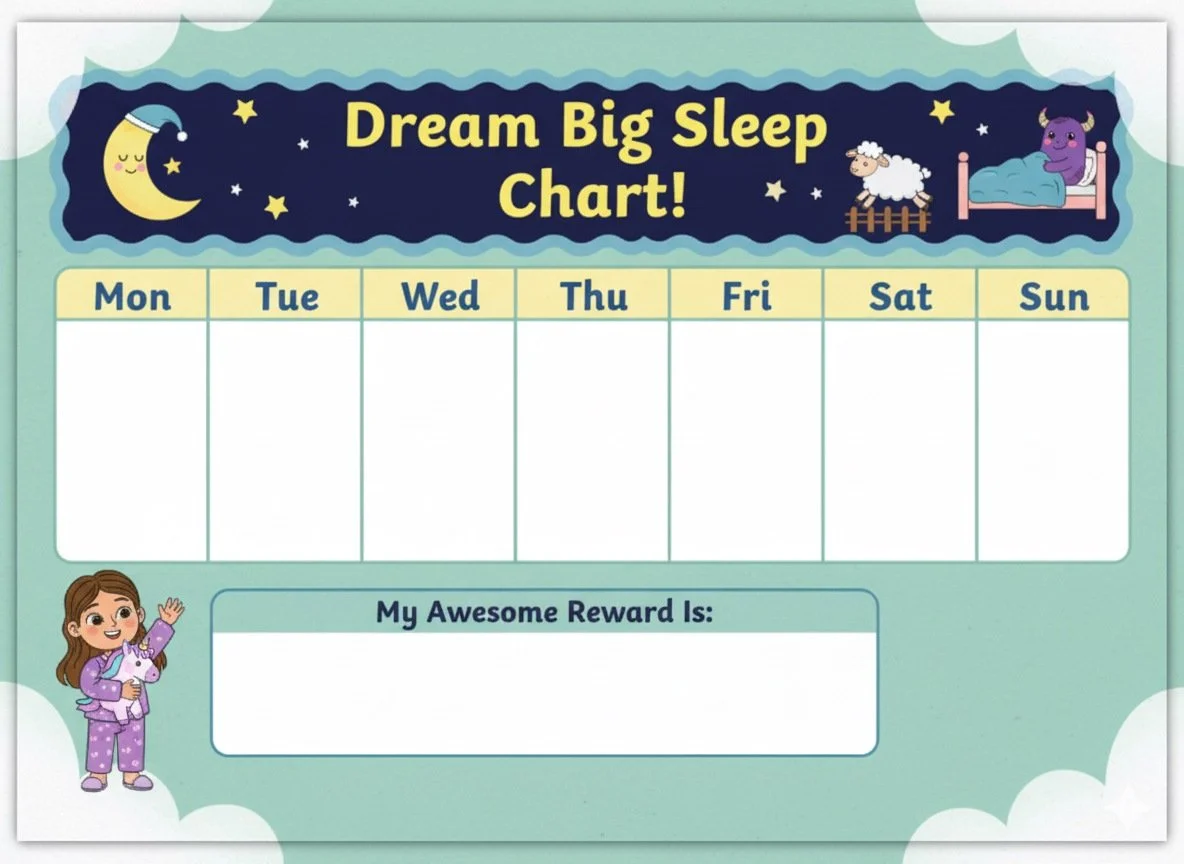
The "Dream Big Sleep Chart" is a fantastic example of a bedtime rewards chart, designed to make tackling sleep challenges fun and motivating for your little one. These charts harness the power of positive reinforcement, turning a potentially stressful routine into a game they can win.
Download your free printable sleep rewards chart.
So, how do you effectively use a reward chart to help your child achieve those coveted sweet dreams? Let's dive into some tips and strategies.
1. The Power of the "Dream Big Sleep Chart"
Our example chart above features a cheerful design with moons, stars, and friendly characters – perfect for engaging young minds. It's set up for a full week, with clear spaces for each day and a special spot for "My Awesome Reward." This visual representation helps children understand their progress and stay motivated.
2. Tailoring the Chart to Your Child's Specific Challenge
Before you begin, identify the specific sleep challenge you're addressing. Is it:
Staying in their own bed all night?
Going to bed without a fuss?
Sleeping through the night without calling for you?
Staying in bed until a designated wake-up time?
Be very clear about the one goal you're working on. Trying to tackle too many things at once can be overwhelming for a child. Make sure the goal is specific and stated in positive terms, so that you can reward (reinforce) the desired behavior – for example, rather than “no staying up late”, use “in my bed by 8 pm”; rather than, “I didn’t get out of my bed at night”, say, “I stayed in my own bed all night long”.
3. Making it a Team Effort: Introduce the Chart Together
Sit down with your child and excitedly introduce the reward chart. Explain what it is and how it works in simple, positive language. "Look at our special 'Dream Big Sleep Chart'! This is going to help you become a sleep superstar!" "Every morning that you stay in your bed all night long (or whatever the goal is), we get to put a sticker/draw a star on your chart!"
Let your child feel a sense of ownership. Invite them to choose characters, colors, or images to decorate the chart, or draw and color images with you. They might even enjoy helping pick out stickers for their chart.
4. Choosing the Right Reward: Small Wins Lead to Big Success
The "My Awesome Reward Is ___" section is crucial. The reward doesn't have to be expensive or elaborate. In fact, smaller, more frequent rewards are often more effective for young children. What’s most important, is that the reward is actually motivating for your individual child. Consider giving your child two or three options to choose from, to help ensure motivation.
Tips for choosing rewards:
Involve your child: Ask them what they'd like to earn. This makes them more invested.
Experiences over things: A trip to the park, extra story time, a special craft activity, a movie night, or choosing dinner are often more motivating than a new toy.
Small, tangible rewards: Stickers, temporary tattoos, a new coloring book, or a small treat can work for daily or mid-week wins.
Cumulative rewards: For bigger goals (e.g., a full week of successful nights), consider a slightly larger reward. Weekly rewards should only be used with older children who have language skills and can tolerate the delay. For most children, rewards should be immediate.
Avoid food as the primary reward: While a small treat occasionally is fine, try to focus on non-food rewards to avoid associating food with emotional regulation.
Use visual cues: If possible, take a photo of the reward item, print a picture from the internet, or create a line drawing to represent the reward on the chart.
5. Consistency is Key: Stick with It!
This is perhaps the most important tip. For the reward chart to work, you need to be consistent every single day, without fail.
Morning Check-in: Make it a ritual. Every morning, discuss how the night went. If they met the goal, celebrate and let them place their sticker or draw their star on the chart. If not, gently remind them of the goal for tonight without shaming.
Positive Language: Focus on what they did well, even if they didn't fully achieve the goal. "You stayed in bed until 3 AM, that's longer than last night! Tonight, let's try to stay until the sun comes up!"
Praise Effort: Acknowledge your child’s effort and determination. "You're really trying hard to be a sleep superstar!"
6. Gradual Fading: The Long-Term Goal
The reward chart is a tool to establish new habits, not a permanent fixture. As your child consistently achieves their sleep goals, you can begin to gradually phase out the chart.
Increase the time between rewards: Instead of daily stickers, gradually move to every two days, then three, then a weekly (larger) reward.
Shift to internal motivation: Emphasize how good they feel after a full night's sleep. "Don't you feel so energetic after sleeping in your own bed all night?"
Replace with verbal praise: Once the habit is ingrained, continued verbal praise and acknowledgment will be sufficient.
If you find that your child does better with the chart, it’s perfectly OK to continue using it for now—you can always try fading it out again later.
7. Troubleshooting Common Challenges
My child lost interest:
First, re-evaluate the reward—is it truly motivating? Try offering a new choice or create a rewards menu with 4-6 different rewards that your child can choose from—only give them 2 or 3 choices at a time, however, so they’re not overwhelmed. You may need to rotate the rewards frequently, to keep them motivating. And, sometimes, simply making the chart more interactive (letting them decorate it) can rekindle interest, or create a new chart with new characters or colors.
They're not achieving the goal:
Is the goal too big? Try breaking it down into smaller, more achievable steps. Assess where your child is right now and then set the goal so that it is achievable. For example, if your child gets out of bed or leaves their room 3 times (on average) before falling asleep, start with the expectation that they, “get out of bed no more than 2 times after lights-out”. Or, if staying in bed all night is too much, start with, "staying in bed for 1 hour after lights out." Once your child is meeting that goal, you can gradually start to extend it or increase the expectations.
They're cheating/lying:
This is rare, but if it happens, reiterate the importance of honesty and that the chart is about their effort. Adjust the reward to something less tempting if needed.
Using a reward chart like the "Dream Big Sleep Chart" can be a game-changer for families facing sleep challenges. It empowers children, provides clear, concrete expectations, and transforms a source of stress into an opportunity for positive growth and, ultimately, a house full of sweet, peaceful dreams.
Good luck and enjoy those quiet evenings!
Every child is different, and sometimes a tailored approach is what’s needed to see real change. You can book a free initial consultation with me to explore how we can work together to improve your family’s sleep.

ABOUT THE AUTHOR
Elisha Iggulden, M.Ed., BCBA, CBSS is a Board Certified Behavior Analyst (BCBA) and Certified Behavioral Sleep Specialist with over 14 years of experience supporting children and families. She is the founder of Gentle Sleepers and specializes in sleep support for toddlers and children (ages 1-10), with specialized expertise for neurodivergent children, including those with autism, ADHD, and anxiety. Elisha offers virtual sleep consultations to families worldwide.
