

Your Neurodivergent Child Deserves Sleep–
And So Do You
Certified Behavioral Sleep Specialist and BCBA providing gentle, evidence-based sleep support for children with special needs, including autism and ADHD.
A gentle, no-pressure call to talk through what’s going on and how I can help.
✨
Why Sleep Is
Different
for Neurodivergent Children
And why generic advice keeps failing your family.
You've tried the books. The sleep training programs. Maybe even other consultants.
Some things helped temporarily—weighted blankets, rigid bedtime routines, rewards charts, melatonin…
But nothing created lasting change because none of them were designed for
how your child's brain ACTUALLY works.

Why These Approaches Failed:
They ignored neurology
Your child's brain processes information, sensation, emotion, and reward differently than neurotypical brains. Strategies that work for typical development often backfire for neurodivergent children.
They oversimplified complexity
Your child doesn't just have autism or ADHD—they have sensory processing differences, possible anxiety, perhaps GI issues, and medication effects all interacting simultaneously. Cookie-cutter approaches can't begin to address this.
They fought against your child’s nervous system
Sensory sensitivities aren't "preferences". Rigidity isn't stubbornness. Hyperactivity isn't a choice. When strategies try to override these neurological realities instead of working with them, they create more distress without solving the problem.
They lacked specialized training
Most sleep consultants learned methods designed for neurotypical babies and toddlers. They have no training in autism, ADHD, sensory processing disorders, or how behavioral principles need to be adapted for neurodivergent learners.
What Actually Works:
A Neurodivergent-Informed Approach
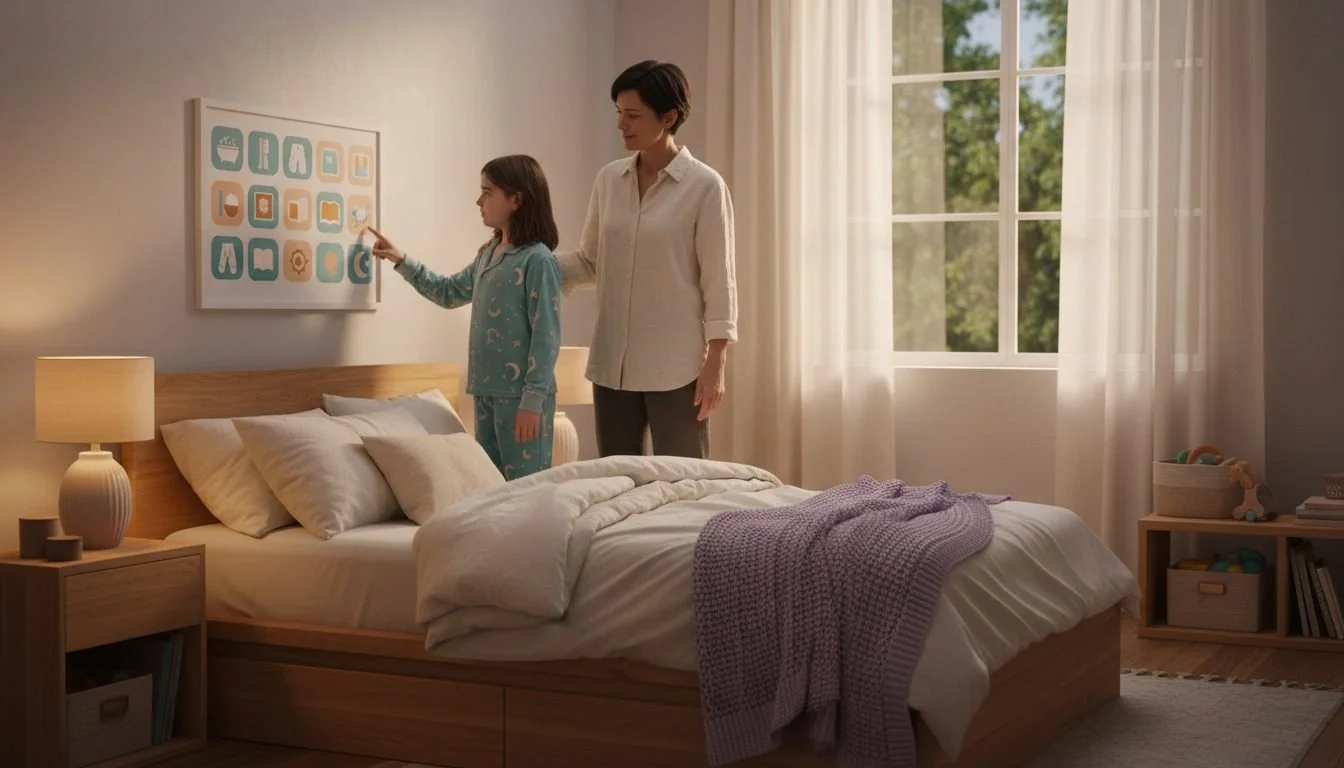
Your child doesn't need another generic sleep plan.
They need strategies that:
Respect their sensory system rather than trying to override it
Work with their anxiety instead of dismissing it as manipulation
Accommodate processing differences in how they receive and understand information
Build on their strengths while supporting their genuine challenges
Consider co-occurring conditions as part of the whole picture, not obstacles to ignore
This is what neurodivergent-informed sleep support looks like, and it's what YOUR family deserves
We'll talk through your child's sleep needs and decide the best-fit support—together.
✨
Why Choose a BCBA for Neurodivergent Sleep?

Because your child's brain deserves more than generic sleep advice.
Master's-Level Autism Expertise
My Master of Education from Arizona State University focused specifically on Autism and Related Developmental Disorders — not child development generally, not education broadly. I understand the neuroscience behind why your child's brain resists sleep, and I know the evidence-based behavioral frameworks that actually work with it.

Certified in Behavioral Sleep Science
My certification as a Certified Behavioural Sleep Specialist (CBSS) isn't the same as a general sleep consultant course. It's grounded in behavioral science — the same science behind ABA — applied specifically to how children learn (or struggle to learn) the skill of sleep. For neurodivergent kids, that distinction matters enormously.

Verified by the Autism Community
As a Category A Behaviour Consultant on the Registry of Autism Service Providers (RASP) in British Columbia, I'm held to rigorous professional and ethical standards by the autism community — not just general sleep or parenting spaces. You can verify my registration here and trust that this isn't a self-assigned title.
This combination means you're not getting a sleep coach who's read about autism, or a behavior analyst who's dabbled in sleep — you're getting someone whose entire professional focus lives at that intersection.
Learn about my approach, experience, and philosophy.
✨
Specialized Support
for Neurodivergent Sleep Challenges
You need an expert who ACTUALLY understands sensory processing, executive function, anxiety disorders, AND neurological differences.
As a Board Certified Behavior Analyst and Certified Behavioral Sleep Specialist, I don’t just understand these differences, I know how to work with them to build a personalized sleep plan your child can actually succeed with.
-
I understand:
How children with autism process sensory input differently
Why rigidity and need for sameness are neurological, NOT always behavioral choices
Motivation and how to work WITH intense interests, rather than against them
Interoception challenges (not recognizing body signals like tiredness)
Adapting communication for different language processing styles
What we’ll address together:
✓ Sensory processing barriers to sleep
✓ Rigidity and routine inflexibility
✓ Communication challenges affecting bedtime
✓ Behavioral challenges
✓ Interoception difficulties (not recognizing tiredness)
✓ Special interest incorporation
✓ Transition and change management -
I understand:
Executive function challenges affecting routine following
Hyperactivity management without medication-only approaches
Time blindness and schedule difficulties
Reward system modifications for ADHD motivation
Understanding how stimulant medications affect sleep timing
Addressing racing thoughts and difficulty "shutting off"
What we’ll address together:
✓ Hyperactivity at bedtime
✓ Racing thoughts preventing sleep
✓ Executive function challenges with routines
✓ Medication timing and effects
✓ Time blindness and schedule struggles
✓ Impulsivity disrupting boundaries
✓ Difficulty recognizing sleep cues -
I understand:
Distinguishing anxiety from manipulation
Graduated exposure approaches for fears
Cognitive strategies appropriate for different developmental levels
When reassurance helps vs. when it reinforces
Physical anxiety symptoms disrupting sleep
OCD-related bedtime rituals and compulsions
Together we’ll address:
✓ Bedtime fears and worries
✓ Separation anxiety
✓ Rumination and overthinking
✓ Physical anxiety symptoms
✓ OCD-related bedtime rituals
✓ Reassurance-seeking patterns -
I understand:
Sensory Sensitivities (Hyper-Responsiveness):
Tactile: Pajama textures, bedding, temperature
Auditory: Household sounds, white noise tolerance
Visual: Darkness comfort, light sensitivity
Olfactory: Scent sensitivities in bedroom
Gustatory: Toothpaste, evening snacks
Vestibular: Movement comfort in bed
Proprioceptive: Pressure needs for settling
Sensory Seeking (Hypo-Responsiveness):
Need for movement before stillness possible
Deep pressure requirements for regulation
Oral motor needs (chewing, sucking)
Tactile input seeking
Vestibular stimulation needs
Visual input seeking
Olfactory input seeking
Together, we’ll address:
✓ Environmental modifications
✓ Regulation strategies
✓ Sensory diet integration
✓ Vestibular and proprioceptive needs -
As a BCBA, I understand:
How neurodivergent children learn differently
Why typical reward systems might fail (and what works instead)
The difference between escape-maintained and attention-maintained behaviors
How to conduct a functional behavior assessment
Systematic desensitization procedures for rigidity and anxiety
Errorless learning strategies that keep your child successful and motivated
Visual support systems for different learning and communication styles
Data-driven decision making (not guessing!)
I‘m qualified to treat complex presentations:
✓ Multiple co-occurring diagnoses
✓ Medical conditions affecting sleep
✓ Developmental delays
✓ Communication barriers
✓ Severe behavioral challenges
Details, pricing, and what’s included..
✨
“Your child’s diagnosis does NOT mean a lifetime of poor sleep and tired days.”
My Neurodivergent-Informed Approach
How We'll Address Your Child's Unique Sleep Barriers

STEP 1: Comprehensive Neurodivergent Assessment
BEYOND basic sleep questions , we’ll explore:
Diagnostic & Medical History:
All diagnoses and when received
Current medications and timing
Co-occurring conditions (epilepsy, GI issues, etc.)
Therapies and supports currently in place
Sensory OT findings if available
Sensory Profile:
Assessment across all seven sensory systems
Identification of triggers and preferences
Current sensory strategies and effectiveness
Sensory seeking vs. avoiding patterns
Communication & Learning Style:
Receptive and expressive language levels
Visual learning strengths
Processing speed considerations
AAC use if applicable
How your child best receives information
Behavioral Patterns:
Function of current sleep resistance
What's been reinforced over time
Previous interventions and responses
Anxiety manifestations
Rigidity patterns and flexibility level

STEP 2: Neurodivergent-Centered Plan Development
Your sleep plan will include:
Sensory Accommodations: Specific environmental modifications individualized for YOUR child's sensory needs—not just "try a weighted blanket"
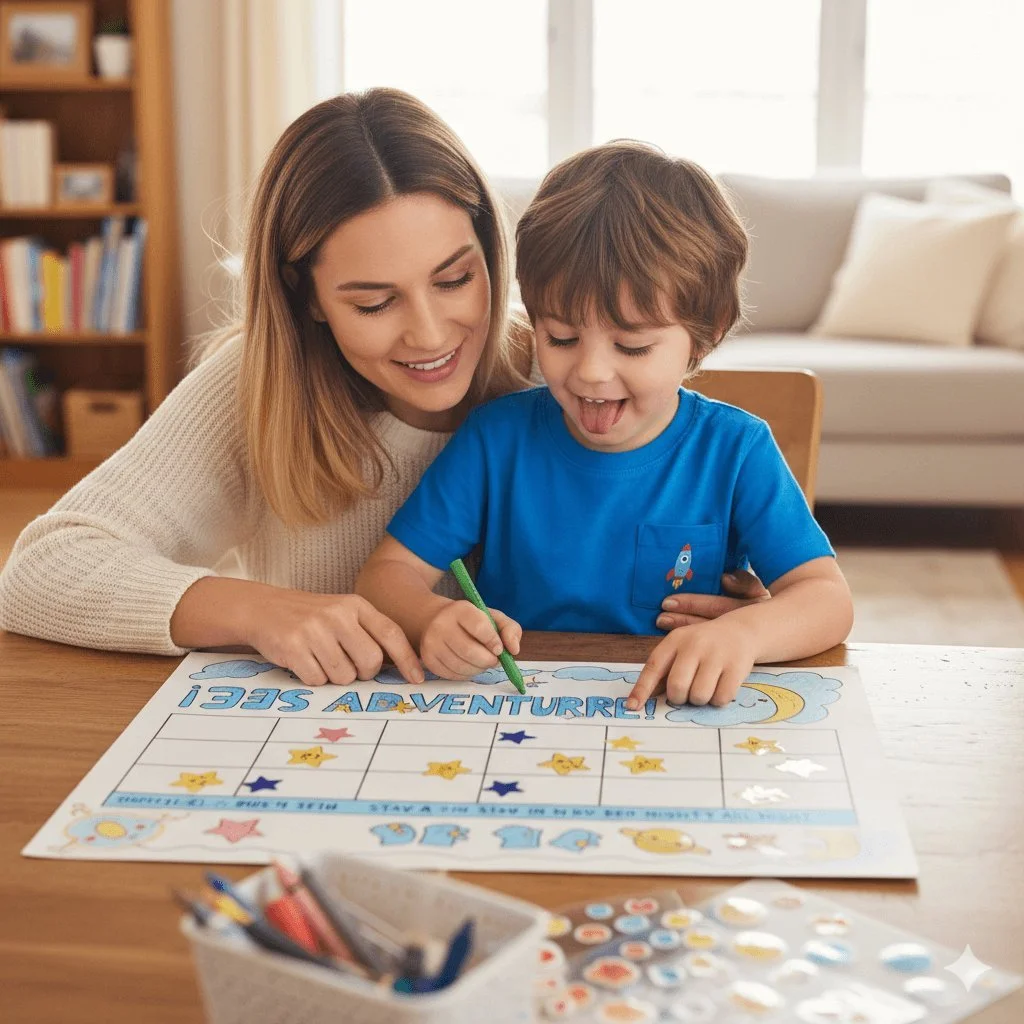
Visual Communication Supports: Picture schedules, social stories, visual timers, first-then boards—designed for YOUR child's learning and communication style
Autism/ADHD-Specific Strategies: Evidence-based behavioral interventions that actually work for neurodivergent learning styles and motivation
Anxiety Management Protocol: Graduated exposure, cognitive strategies, and regulation tools matched to your child’s developmental level
Communication Modifications: Reducing language demands, using clear concrete language, implementing AAC if needed
Medication Coordination: Working WITH your prescribing physician on timing and sleep impact (I don't prescribe, but I do collaborate)
Flexibility Within Structure: Building tolerance for small changes while maintaining necessary predictability
STEP 3: Specialized Implementation Support
What makes this different from generic sleep coaching:
Sensory Troubleshooting
When issues arise, I understand whether they're sensory, behavioral, or both—and how to respond appropriately
Meltdown vs. Tantrum Distinction
Knowing the difference determines the response—I teach you to recognize and respond effectively
Autism-Informed Modifications
When standard approaches don't work, I know exactly how to adapt for autistic thinking
Communication Problem-Solving
When verbal instructions fail, we shift to visual/tactile methods your child CAN process
ADHD Strategy Adjustments
When executive function challenges interfere, I provide specific accommodations and supports
Co-Occurring Condition Navigation
Managing multiple diagnoses simultaneously with prioritization and systematic approaches

Step 4: Long-Term Neurodivergent Success
Preparing for your child's future:
Regression Prevention: Understanding neurodivergent-specific triggers (routine changes, transitions, sensory fluctuations)
School Transitions: Maintaining sleep through school schedule changes, breaks, and adjustments
Developmental Changes: Adapting strategies as your child matures and their needs evolve
Advocacy Skills: Helping you explain your child's needs to family, schools, healthcare providers
Building Self-Advocacy: Teaching your child to recognize and communicate their own sleep needs as they mature
A step-by-step look at the consultation process and the support you’ll receive every day.
✨
“We tried everything…”
"Our son was diagnosed with autism and has always been a poor sleeper - bedtime tantrums, late nights, and frequent wake-ups in the middle of the night. We tried everything and our family was exhausted.
Now, he is falling asleep at a decent time and sleeping through the night on most nights, with no more bedtime battles. We learned so much working with Elisha - we only wish we'd called her sooner!"
- Sara M., parent of a 6-year-old boy with autism
Understanding Your Child's
Neurodivergent Brain
Your child isn't broken—their brain is BEAUTIFULLY different.

The sensory sensitivities aren't "pickiness"
They're genuine neurological differences in how their brain processes input.
The rigidity isn't "stubbornness"
It's how autistic brains seek predictability in an overwhelming world.
The hyperactivity isn't "not trying"
ADHD brains genuinely struggle with self-regulation and impulse control.
The anxiety isn't "manipulation"
It's a real neurological difference in threat perception and stress response.
The communication challenges aren't "refusing"
They're processing differences or actual language limitations.
When you work WITH neurology, instead of against it, EVERYTHING changes.
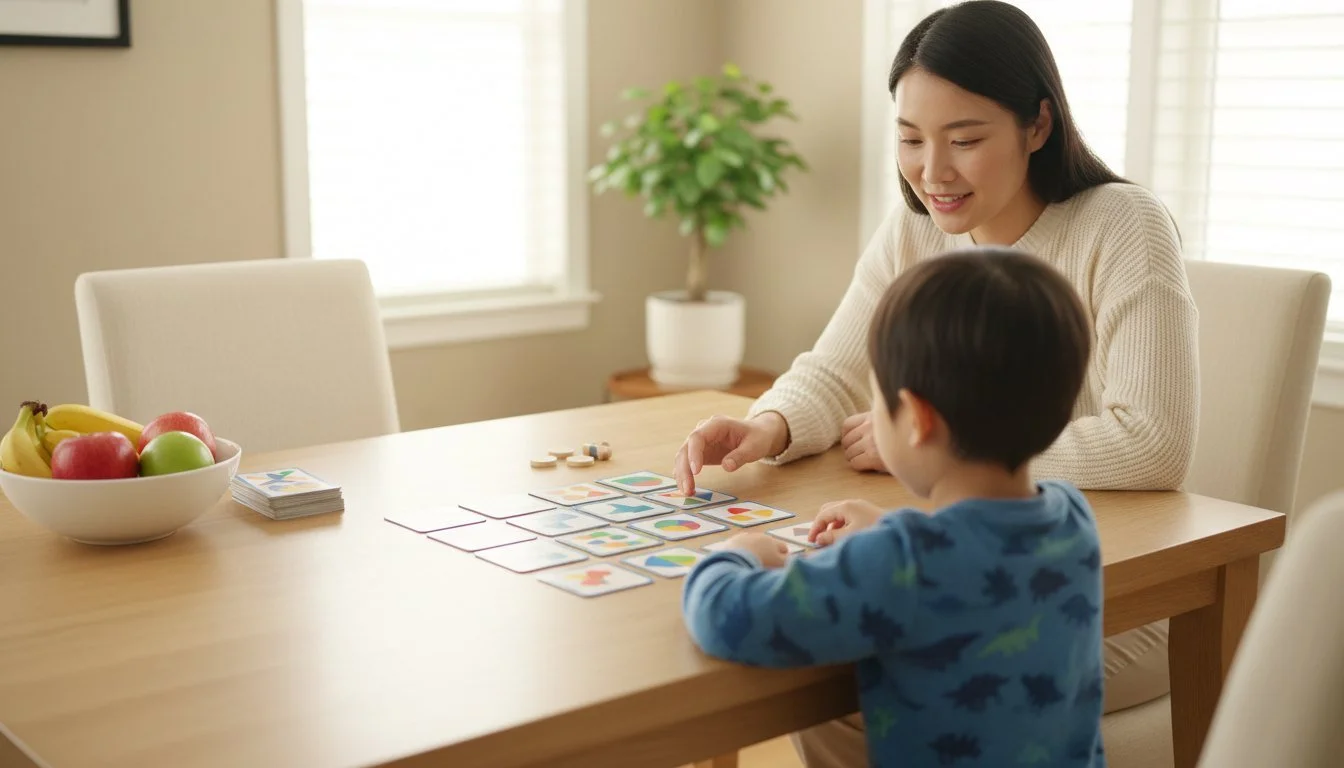
Your child doesn't need to mask or conform to neurotypical expectations.
They Need:
Environments that accommodate their sensory needs
Communication that matches their processing style
Strategies that work with their learning differences
Validation that their experiences are real
Support that respects their neurodivergence
When these needs are met, sleep becomes possible—not through force, but through understanding.
Free comprehensive sleep guides to help your family right now.
✨
If you’ve been told your child, “just doesn’t sleep well”, or that sleep training won’t work for your child, I’m here to tell you:
That’s not true.
Your Neurodivergent Child Deserves
Specialized Support
Don’t settle for generic advice from consultants who don't understand autism, ADHD, or sensory processing.
Work with someone who specializes in EXACTLY what YOUR CHILD needs.
All sleep coaching packages start with a free consultation, to ensure fit and set you up for success.
✨

Before You Go…
Get Your FREE Neurodivergent Sleep eBook!
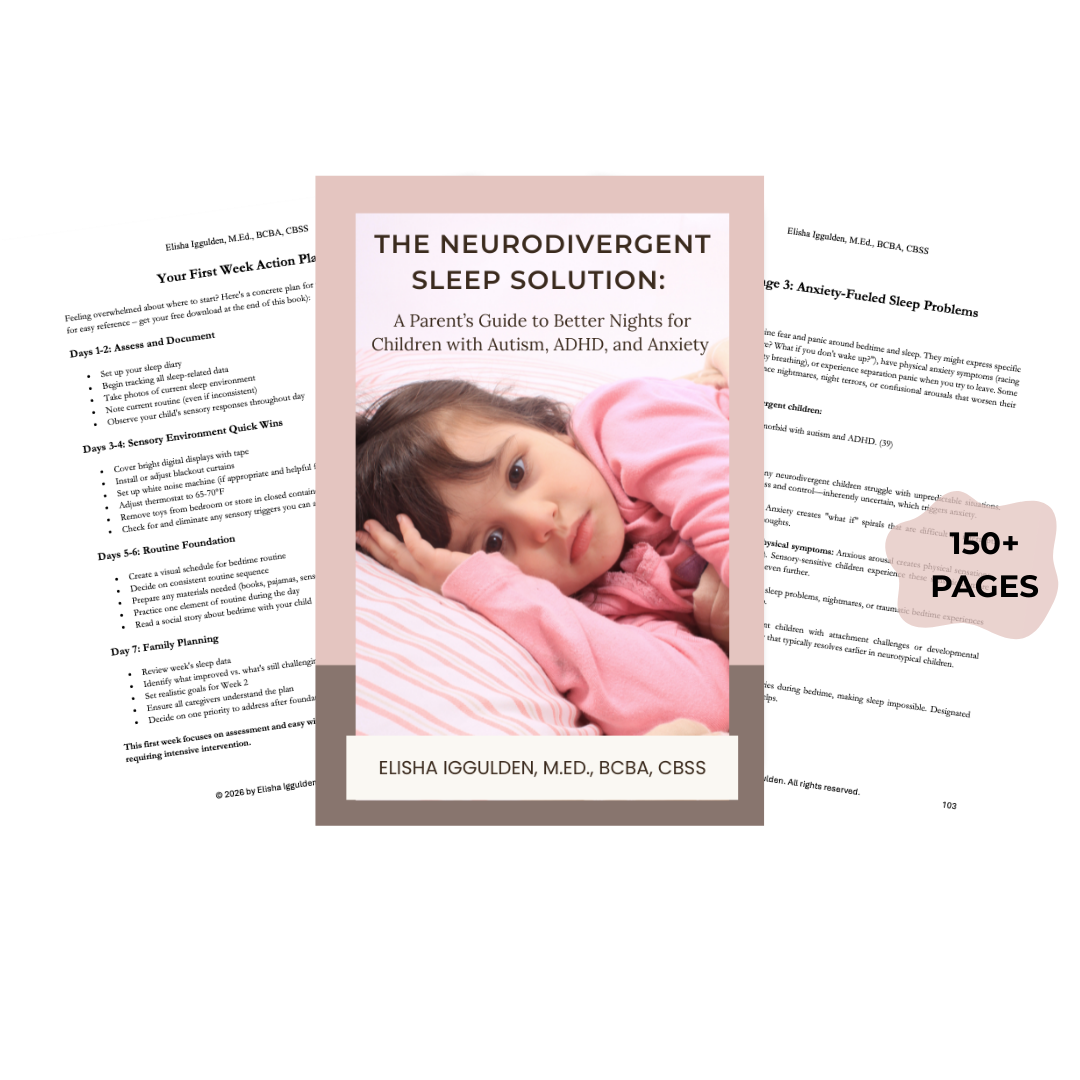
The Neurodivergent Sleep Solution: A Parent’s Guide to Better Nights for Children with Autism, ADHD, and Anxiety
150+ pages of gentle, evidence-based strategies that respect your child’s unique needs.
Written by Elisha Iggulden, Certified Behavioral Sleep Specialist & BCBA.