
Why “Cry it Out” Often Doesn’t Work for Sensitive and Neurodivergent Children
By Elisha Iggulden, M.Ed., BCBA, CBSS
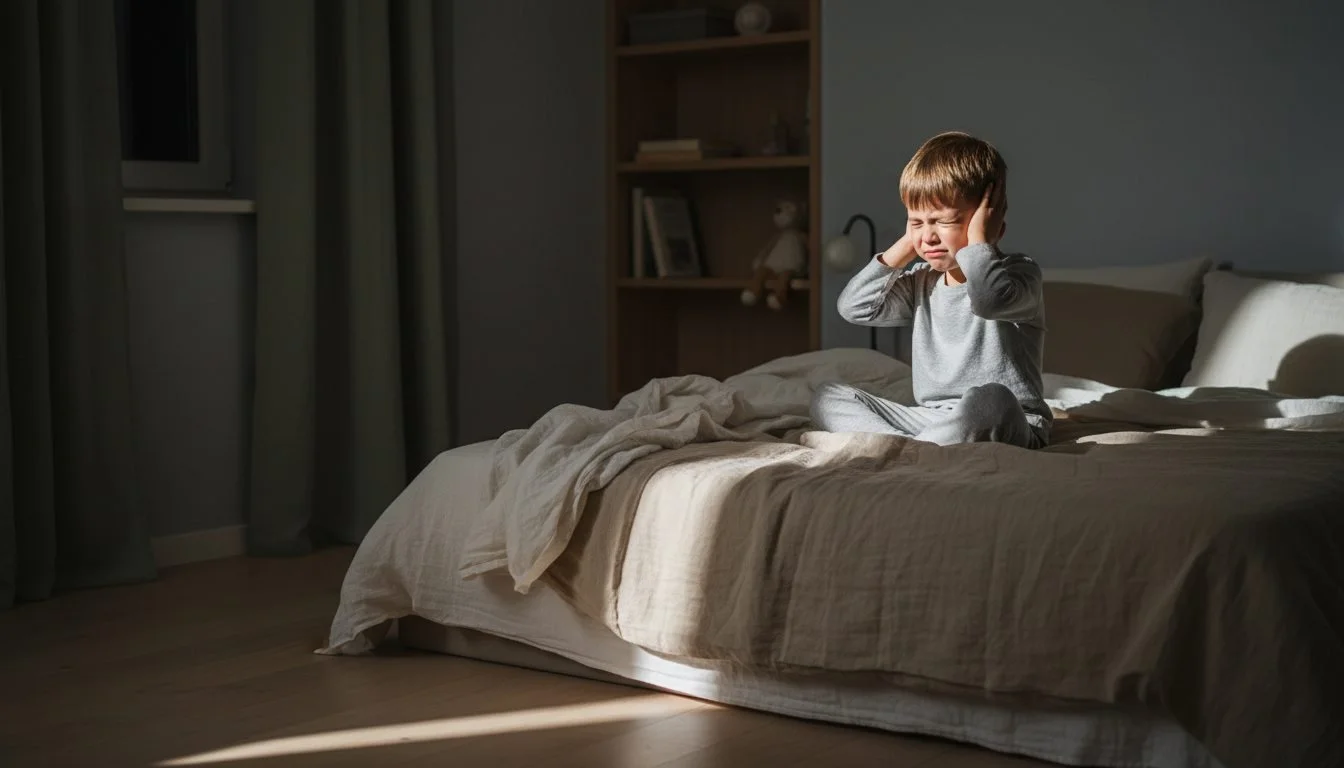
If you’ve ever tried (or been told to try) “Cry It Out” and it felt wrong for your child, you’re not alone. Many families of sensitive or neurodivergent children (including children with autism, ADHD, or anxiety) discover that traditional sleep training approaches don’t just feel mismatched—they often backfire.
In this post, you’ll learn why Cry It Out can be especially hard on sensitive nervous systems, how sensory processing affects sleep, and what to do instead—using gentle, neuro-affirming, evidence-based strategies.
If that sounds like your family, please know: what you’re navigating is real, it has a reason, and there is a better path forward.
What you’ll learn
What “Cry It Out” really asks a child to do
Why sensitive and neurodivergent nervous systems often respond differently
How sensory processing affects falling asleep and staying asleep
Signs that Cry It Out may not be the right fit for your child
Gentle, neuro-affirming alternatives that build sleep skills without overwhelm
What is “Cry It Out” (CIO)?
“Cry It Out” is a sleep training method where a child is put to bed and caregivers do not respond (or respond minimally) when the child cries—often with the goal of teaching independent sleep. Some variations include timed checks, while others involve no checks at all.
Regardless of the variation, the core expectation is the same: the child must tolerate some level of distress long enough to fall asleep without co-regulation or parent support.
Why Cry It Out often doesn’t work for sensitive or neurodivergent children
For many children, sleep is not simply a “skill” issue. It’s a regulation issue. Neurodivergent brains often process sensory input, stress, and transitions differently—so the path to sleep may require more support, not less.
1) Their nervous system can stay in “high alert” longer
Sensitive and neurodivergent children may spend more time in a state of heightened arousal (fight/flight/freeze). When a child is already running “hot,” Cry It Out can push them further into distress, rather than toward calm sleepiness.
In practical terms, that can look like: longer crying, more hyperventilation, vomiting, panic, or escalating bedtime resistance over time.
2) Sensory processing differences can make bedtime feel physically uncomfortable
Many neurodivergent children experience sensory sensitivities that make it hard to settle: scratchy seams, pajamas that “feel wrong,” the hum of a fan, a distant dog barking, the smell of detergent, a nightlight that’s too bright, or a blanket that’s too heavy/light.
If your child’s body is uncomfortable or overstimulated, being left alone to “work through it” can feel impossible. Their nervous system isn’t being stubborn—it’s communicating that the environment isn’t sleep-friendly for their unique sensory profile.
3) Anxiety and uncertainty can spike when a caregiver disappears
Some children experience intense worry at bedtime—about separation, the dark, being alone, or not knowing what will happen next. For these kids, Cry It Out can increase fear and reduce trust around bedtime routines.
When bedtime becomes associated with panic (rather than safety), you may see more bedtime battles, more night wakings, and increased dependence on parent presence—not less.
4) Interoception and communication differences matter
Interoception is the ability to notice internal body cues (like hunger, fullness, needing the toilet, pain, or the early signs of sleepiness). Many neurodivergent children have differences in interoception. They may not “feel” sleepy until they are overtired, or they may not recognize and communicate what’s uncomfortable.
If a child can’t accurately notice or communicate what’s wrong, leaving them to cry alone can intensify dysregulation because the underlying need remains unmet.
5) “One-size-fits-all” approaches don’t account for neurodivergent learning profiles
Traditional sleep training often assumes that if caregivers are consistent, the child will adapt quickly. But learning is not only about consistency—it’s about whether the task is achievable for that child’s nervous system, sensory needs, and developmental stage.
Some children need more gradual steps, more predictability, and more co-regulation to gradually build independent sleep in a way that sticks.
Signs “Cry It Out” may not be a good fit for your child
Every child is different, but these signs often indicate that CIO may be increasing stress, rather than building sleep skills:
Crying escalates over time rather than decreasing after a few nights
Your child becomes panicked at bedtime or when you start the routine
New or increased night wakings begin after starting CIO
Your child shows signs of heightened anxiety during the day
Bedtime routine becomes longer, more rigid, or more conflict-heavy
Your own stress level makes consistency impossible (which is very human)
If you’re seeing these patterns, it doesn’t mean you “did it wrong.” It often means the approach doesn’t match your child’s nervous system needs.
What to do instead: Gentle, neuro-affirming sleep support
You can support independent sleep without forcing your child to “cry it out.” A neuro-affirming approach focuses on reducing barriers to sleep (sensory + anxiety), building regulation skills, and shaping sleep independence in small, achievable steps.
Step 1: Make sensory comfort non-negotiable
Start by identifying what your child’s body needs to feel comfortable at night. Consider:
Lighting: blackout curtains, dim warm light, or no light (depending on your child)
Sound: white noise, predictable background sound, or a quieter environment
Temperature: many kids sleep best in a room that is slightly cool
Clothing: tagless, seam-free, preferred fabrics
Bedding: specific textures, weighted blanket (only if appropriate/safe for your child), or compression sheet
Step 2: Build predictability (especially for anxious children and those with autism)
Predictability reduces nervous system load. A consistent routine, visual schedule, or “first-then” language can help your child know what’s coming next—so they don’t have to stay on alert.
Keep the routine simple and repeatable. For example: bathroom → pajamas → 2 books → cuddle → lights out.
For more on how to create and implement a calming bedtime routine using visual schedules, check out my post Calming Bedtime Routines for Children with Sleep Challenges (Especially Autism).
On my Printable Tools page, you can also find bedtime routine visual schedules that you can download and print for free.
Step 3: Teach regulation, not just “independence”
For sensitive sleepers, the key skill is often regulation—being able to feel calm enough to drift off. You can teach this through co-regulation first, then gradually reduce support.
Gentle regulation supports might include slow breathing together, deep pressure cuddles (if your child likes them), a bedtime song, or a calming script that stays the same each night.
Step 4: Use gradual, respectful fading (instead of sudden withdrawal)
If your child currently needs you present to fall asleep, you can use gradual fading strategies that reduce support over time. Examples include:
Camping Out (or “chair method”) – a gradual sleep training strategy where a parent stays in the child's room, initially close to the child’s bed/cot, then moves further away over 1–3 weeks, eventually moving out of the room entirely.
Quiet Based Visiting (or timed supports) - a gentle sleep training strategy for toddlers and older children where the parent checks on their child and provides brief reassurance at set, consistent time intervals.
Routine-Based Fading: gradually reduce the length of one support (e.g., 10 minutes of cuddles → 8 → 6)
These approaches respect your child’s pace while still moving toward more independent sleep.
Step 5: Address the “why” behind night wakings
Frequent waking can be driven by schedule mismatch, sensory discomfort, anxiety, or learned patterns. A gentle plan looks at bedtime timing, daytime regulation, and the environment—then targets one change at a time so your child can succeed.
Want step-by-step neuro-affirming sleep support strategies?
If your child is highly sensitive, anxious, or has autism or ADHD—and generic sleep advice hasn’t helped—you don’t need to force sleep. You need strategies that support your child’s unique nervous system.
Download my free eBook, The Neurodivergent Sleep Solution, for a gentle, evidence-based roadmap to better nights (including practical strategies for bedtime resistance, night wakings, sensory supports, and anxiety).
Final thoughts: your child can sleep better
If Cry It Out hasn’t worked for your child—or has made things worse—you’re not imagining things, and you’re not the only one. Sensitive and neurodivergent nervous systems genuinely respond differently to sleep training, and that means the solution needs to look different too.
The good news is that peaceful sleep is possible for your child. It may take more gradual steps, more environmental tuning, and more co-regulation along the way—but those aren’t signs of weakness. They’re signs that you’re paying attention to what your child actually needs.
Start with one small change: adjust the sensory environment, introduce a visual bedtime schedule, or try one gradual fading step. Small, consistent shifts build real momentum. And if you’d like a complete roadmap tailored to your child’s unique profile, The Neurodivergent Sleep Solution eBook walks you through every step.
Better nights are within reach—for your child, and for your whole family.
Sweet Dreams!
If this approach resonates with you, you can learn more about my Neurodivergent Sleep Support services and how I help families like yours.
If you’re feeling overwhelmed and want individualized support that actually fits your child, I invite you to schedule a free initial consultation. We’ll talk through what’s been going on, what’s getting in the way of sleep, and whether a personalized, gentle sleep plan feels like the right next step for your family.

MEET THE AUTHOR
Elisha Iggulden, M.Ed., is a Board Certified Behavior Analyst (BCBA) and Certified Behavioral Sleep Specialist (CBSS) with over 14 years of experience supporting children and families. She is the founder of Gentle Sleepers and specializes in sleep support for toddlers and children (ages 1-10), with specialized expertise for neurodivergent children, including those with autism, ADHD, and anxiety. Elisha offers virtual sleep consultations and support to families worldwide.
